
US Colleges with a Unique Curriculum
Think a different college curriculum is right for you? Check out our list of some of the innovative college curriculum formats below.
Block Plan Structure
In the block-plan curriculum, students take one course at a time. This allows students to really dive into each course without having to worry about juggling multiple classes.

Examples:
Colorado College
Colorado Springs, CO

Founded in 1874, Colorado College is a small liberal arts school of around 2,000 students. It is known for its unique course structure, tight-knit community, and beautiful mountain view.
Key features of their curriculum:
- Courses are structured as the Block Plan: take one class at a time for 18 days, followed by a 4-day break
Learn more here:
https://www.coloradocollege.edu/basics/blockplan/
Cornell College
Mount Vernon, IA

Cornell College values “innovative thinking” and has been featured in the Colleges That Change Lives book since 1996. Fun fact: Cornell College is the first college in the nation to pay a professorial salary to a woman equal to that of her male colleagues.
Key features of their curriculum:
- Courses are structured as the Block Plan: take one class at a time for 18 days, followed by a 4-day break
- Ingenuity in Action is a graduation requirement, which makes sure that you have two experiences that are fully-funded to put on your resume before you graduate
Learn more here:
https://www.cornellcollege.edu/about-cornell/index.shtml
Open Curriculum Structure
An open curriculum is a curriculum where no required core curriculum is offered. Students can pick a schedule that allows them to fully dive into classes that interest them.

Examples:
Amherst College
Amherst, MA

In 1821, Amherst College was founded by a congressional clergy that included the grandfather of poet Emily Dickinson. Originally created as an institution that would educate poor and talented men for the ministry and other vocations, it has become a sought-after liberal arts program with a flexible and student-oriented curriculum.
Key features of their curriculum:
- No core curriculum
- Freshmen take an interdisciplinary seminar
Learn more here:
https://www.amherst.edu/academiclife/open-curriculum
https://www.amherst.edu/academiclife/departments
Brown University
Providence, RI

Founded in 1764, Brown University is distinct from the other Ivy League schools in that it requires no curriculum requirements. Brown emphasizes the importance of learning for the sake of learning and for a “deep sense of purpose.”
Key features of their curriculum:
- Have a completely open curriculum where no specific courses are required
- No GPAs or class rankings exist and all classes can be taken for a grade or for Satisfactory/No Credit
- Students have a choice of 80 concentrations
Learn more here:
https://college.brown.edu/design-your-education/explore-open-curriculum
Hamilton College
Clinton, NY

With a strong belief in the importance to “know thyself,” Hamilton College strongly believes in allowing students to craft a curriculum that fits them. Fun fact: they are one of the oldest colleges in America.
Key features of their curriculum:
- Have no core curriculum, but students work closely with advising to fulfill their academic plan
- Offers 44 concentrations within 57 areas of study
Learn more here:
https://www.hamilton.edu/academics/open-curriculum/open-curriculum
College of the Atlantic
Bar Harbor, ME

College of the Atlantic is a small school of 350 students that live on a 38-acre main campus on the ocean in Maine. Their college seal consists of three symbols- human, earth, and water. This illustrates the “essential connection between people and our environments.” It is for this reason that, at COA, only one major is offered called Human Ecology. Students, however, can use this to study what they want to study and cultivate a learning experience that fits their interests.
Key features of their curriculum:
- There is one major called Human Ecology with no course requirements for that specific major, allowing students to study what they want to study
Learn more here:
https://www.coa.edu/academics/human-ecology-degree/building-your-curriculum/
Grinnell College
Grinnell, IA

Founded in 1846, Grinnell values “intellectual journeys of all kinds,” with an “individually-advised curriculum” that allows students to take the courses that they want to take and work with their advisor to cultivate a roadmap that fits them.
Key features of their curriculum:
- Open curriculum other than a required first-year tutorial course (where you have the choice to pick from 35 different topics for the course)
Learn more here:
https://www.grinnell.edu/admission/why-grinnell/academics/individually-advised
Eugene Lang College The New School for Liberal Arts
New York, NY

Established in 1985 and named after the philanthropist Eugene Lang, the Eugene Lang College at The New School is a school located in Greenwich Village in New York City. With an intensive reading and writing curriculum, Lang’s model prioritizes critical-thinking and small classrooms.
Key features of their curriculum:
- All courses are seminars
- The curriculum is student-directed
Learn more here:
https://www.newschool.edu/lang/
Experiential Learning Structure
An experiential-learning-based curriculum is one where a lot of emphasis is placed on working and getting your hands dirty in the real-world while focusing on your academics.

Examples:
Bennington College
Bennington, VT

Bennington College is a liberal arts school with the mission of promoting “individuality” and “rigorous creativity.” Bennington strongly believes that “learning and making are inseparable” and has an innovative curriculum built with those ideologies in mind.
Key features of their curriculum:
- Have the Plan Process, where students use their personalized plan instead of a major, which is written and rewritten through reflective essays and discussed with faculty
- As a part of the Plan Process, there is a 7 week Field Work Term where they pursue jobs and internships related to their field of interest
- Requires an annual internship
Learn more here:
https://www.bennington.edu/academic-services/bennington-college-plan-process
Deep Springs College
Big Pine, CA
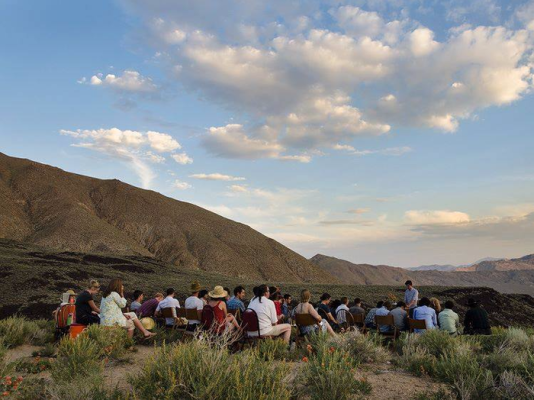
Deep Springs College is a two-year institution consisting of about 25 students. Deep Springs prioritizes the importance of working in addition to learning, and, as a result, students live, work, and learn on a cattle farm. Most students usually transfer to finish the remaining two years at a Bachelor’s program.
Key features of their curriculum:
- There are no majors at Deep Springs College
- Students decide the faculty and curriculum and manage the college in a self-governing body
- Students work on a cattle ranch and learn at the same time
Learn more here:
Alverno College
Milwaukee, WI

Alverno College is a Catholic, Franciscan all girls college with the goal of “developing ability-based education.” With a primary focus of 8 abilities for each course offered, the goal is to use these abilities to be “real-world ready.” The goals are as follows: aesthetic engagement, analysis, communication, developing a global perspective, effective citizenship, problem solving, social interaction, and valuing in decision-making.
Key features of their curriculum:
- Individual grades are not handed out, however a transcript of feedback is
- You intern for at least one semester
Learn more here:
https://catalog.alverno.edu/college-information/curriculum/
Long Island University Global College
Brookville, NY

At the Global College at Long Island University, students visit 8 countries for a semester each, finishing their last semester in New York City. They receive a Bachelor’s in Global Studies.
Learn more here:
https://liu.edu/global/?utm_source=frontpage&utm_medium=web&utm_campaign=home
Image References
Colorado College, “Our Campus”
PathwaysToJobs.com, “Cornell College”
Amherst College, Homepage
Brown University, “Campus Tours and Information Sessions”
Hamilton College, “Directions to Campus”
US News & World Report, “College of the Atlantic”
The New School- Lang, “History”
NYU- Gallatin, “About”
Grinnell College, “About”
US News & World Report, “Alverno College”
LIU Global
Bennington College
Business Insider, “A mysterious 30-person college in the desert produces some of the most successful graduates in the world”
Now that you’ve learned about innovative college curriculums, feel free to check out innovative high school curriculums like Semester Schools.